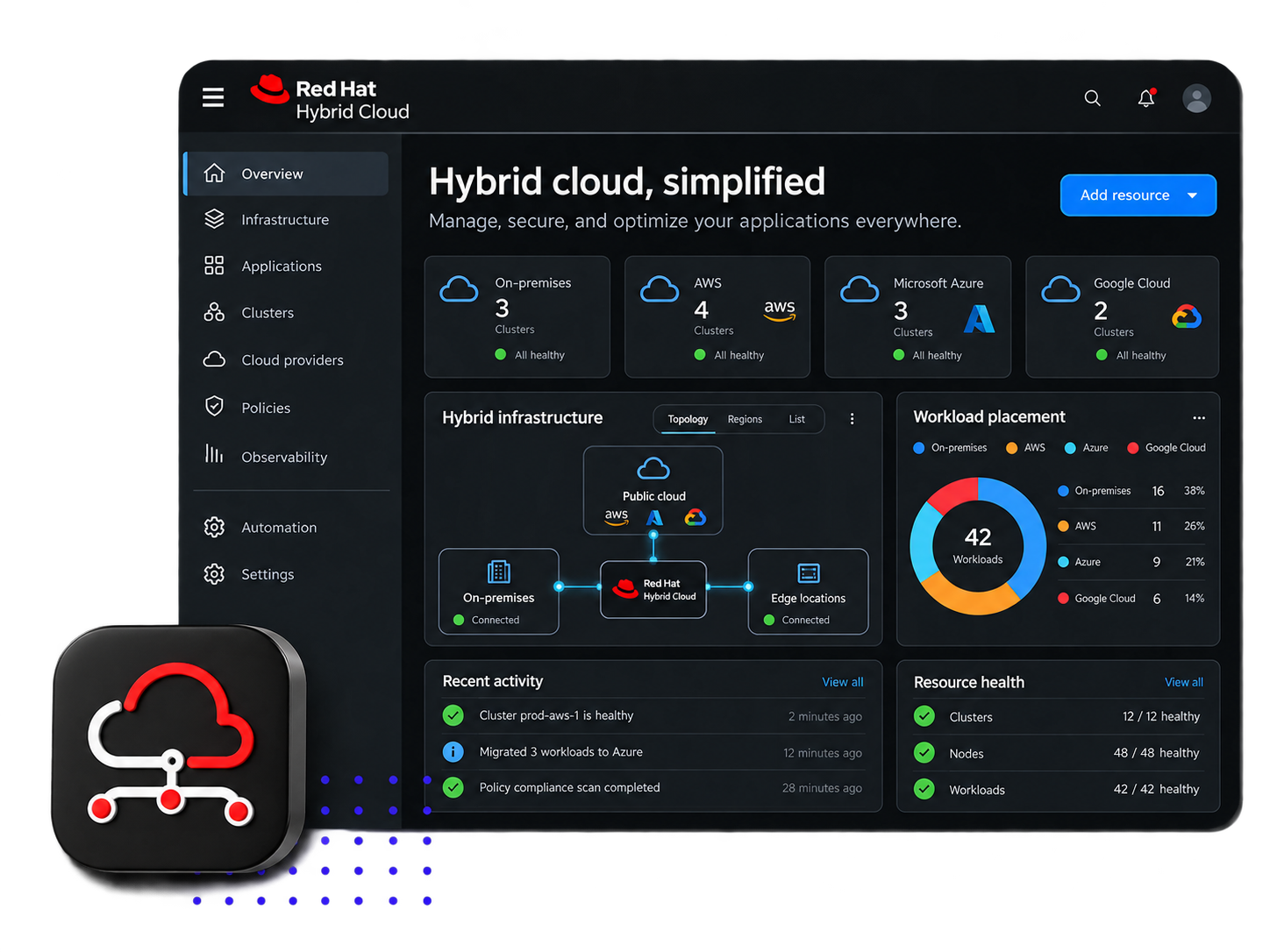



















Customers are operating across datacenters, cloud environments, and increasingly distributed infrastructure. Red Hat helps create a more consistent foundation across those environments — giving organizations greater flexibility to place workloads where they make the most sense while extending familiar platforms, tools, and operations into the cloud.



Separate processes across cloud and on-premises environments can increase manual effort, governance challenges, and operational overhead.
Gaps

Customers need to move or extend workloads to the cloud without introducing unnecessary disruption or complexity.
Placement
Different platforms, tools, and operating models can create silos between datacenter and cloud environments.

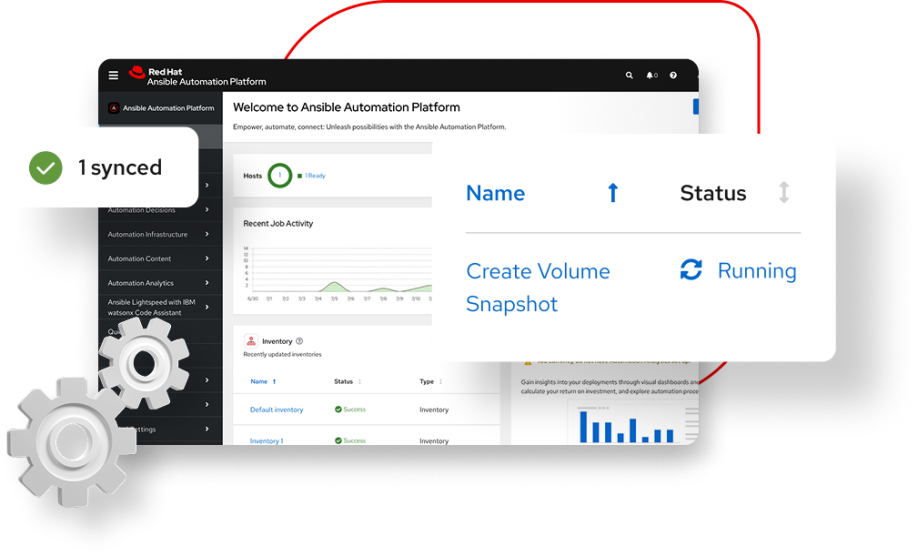

See how Red Hat works with AWS and Microsoft Azure to extend enterprise Linux, application platforms, and automation into leading public clouds.

As workloads spread across on-premises infrastructure and public clouds, disconnected platforms, migration demands, and inconsistent operations can make hybrid cloud harder to manage.









Combine Azure with Red Hat Enterprise Linux, Azure Red Hat OpenShift, and Ansible Automation Platform for a more connected hybrid cloud strategy.
into Microsoft Azure


Bring enterprise Linux, managed OpenShift, and automation into AWS with Red Hat solutions designed to integrate with native AWS services.
into AWS
Hybrid cloud gives customers more value when existing Red Hat investments connect naturally with the cloud platforms they already use.
Explore how Red Hat works with AWS and Microsoft Azure to extend applications, infrastructure, and automation into the public cloud while maintaining a more consistent operational foundation.